Welcome to EWILogic and the world of EWI
The Akai EWI has become a creative tool for thousands of musicians around the world. Logic Pro, Apple’s flagship music and audio creation tool has become one of the most popular platforms for creative music creation and production. Combining these two tools together creates a powerful performance tool that has virtually limitless creative and sonic potential.
I’ve been an EWI player since the EWI 1000 back in the mid 80′s. I’ve owned every iteration of it (except the EWI USB – which is on the shopping list!) as well as several of Yamaha’s wind controllers but I always seem to come back to the EWI. It’s expressive capabilities and MIDI integration make it such a wonderful controller and tool for creative expression when paired with good sound sources and sound programming.
It was the sound and programming part that began my journey into soft synths for the EWI. It’s amazing how little real information there is available about the art of programming for a wind synth. And since the voice of the EWI is about NOTHING if not the programming, that’s a really big hole in the knowledge base of anyone who is just starting to explore the possibilities of this wonderful instrument.
My fascination with Michael Brecker’s use of Apple’s Logic software as a basis for his explorations of an all virtual setup, led me to begin in earnest to use Logic as the foundation of my own EWI rig. I’m sure many of you are aware of George Whitty’s beautiful Logic environment, created for Michael, which was the subject of a very insightful article in the July 2007 issue of Virtual Instruments magazine. (You can find the article here) Sadly the article appeared a few months after Michael’s death in January of that year, at age 57, from leukemia. Since Michael was arguably one of the finest – if not THE finest – EWI players in the world, having access to that environment in that way gave a great kickstart to my own explorations of how Logic could be used to create a performance setup that was flexible, sonically amazing, easily controllable and expansive enough to take whatever you could throw at it, yet stable enough to be reliable in live situations where downtime is decidedly NOT an option.
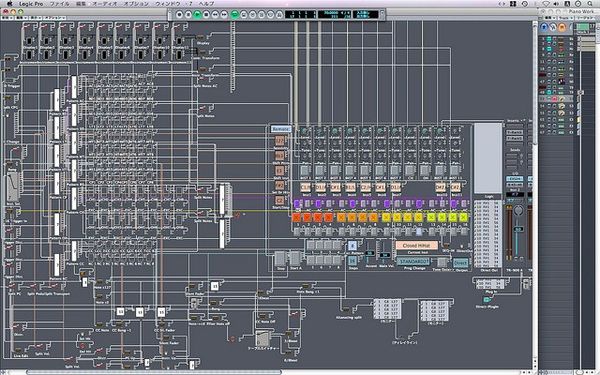
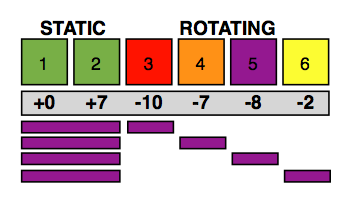
What I found interesting, considering how many EWI players AND Logic users there are out there (just look at the number of videos on YouTube…!), was how little information there was available about just how you’d go about creating the kind of environment for Logic I was looking to create. There’s lots of info about Logic and it’s environment related to use in the studio or live as a keyboard player, but little in the way of use for a breath controller user. I was also especially intrigued, as many of us are, about Michael’s use of the Oberheim rotator mode, and how Whitty recreated that in Logic but on a magnitude of scale that I found amazing. There was ZERO information on how that could be built, and trust me, I looked everywhere for it. So I figured, great… I’ll just have to do it myself.
What follows on these pages are the results of couple years of exploration, frustration, experimentation and just plain old hard work to learn the ins and outs of Logic’s environment and utilize that knowledge to begin creating the tools to have the EWI rig I want. And since I wasn’t able to find the resources to help me in this specific request, I’m going to share what I’ve learned with you in the hopes of making it somewhat easier for you to do this for yourself. I am still exploring and learning something new virtually every day. I’ll continue sharing and answering questions as long as I am able to. Feel free to contact me for questions, ideas or suggestions.
All I ask in return, is that if you have knowledge, tips, tricks, insights, workflows – you name it – share it here among our EWI community, so that we all can learn together. It is my hope that this site will become a destination for EWI users to share their knowledge and showcase their skills.
You’ll find some very helpful links on the various pages to articles, videos, tutorials and resources that I have found incredibly useful in the pursuit of this goal. The video page links to the tutorial videos, some performance videos of my work as well as several other’s performances I find inspiring. In the downloads section you’ll find some very useful tools for the environment. There’s also a Player’s Corner, where I hope you’ll register and share your knowledge with the rest of us, discuss all things EWI and get to know one another.
John Isley
June 2011
Harmonic Xpander V1.0